Environment, people, time
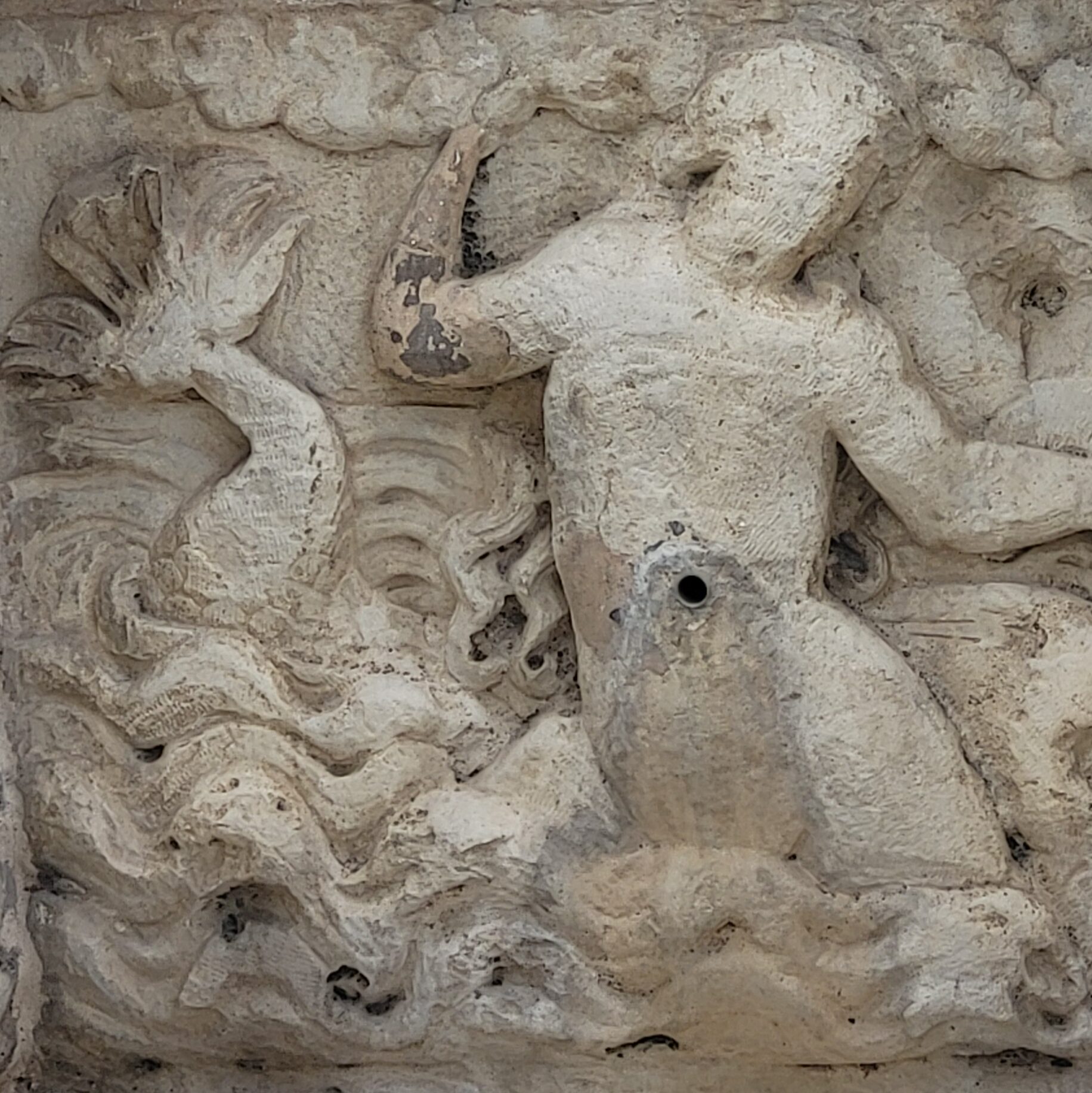
Εrosion
Look at the reliefs and decorative details. Some forms may no longer be as clear as they once were because parts of the surface have been gradually worn away. This type of deterioration is called erosion: parts of the stone surface are slowly and permanently lost.
Stones do not erode in the same way everywhere. Some parts are more vulnerable than others. Rain, wind and salts from the marine environment can gradually wear away the more vulnerable areas, while harder parts may remain less affected.
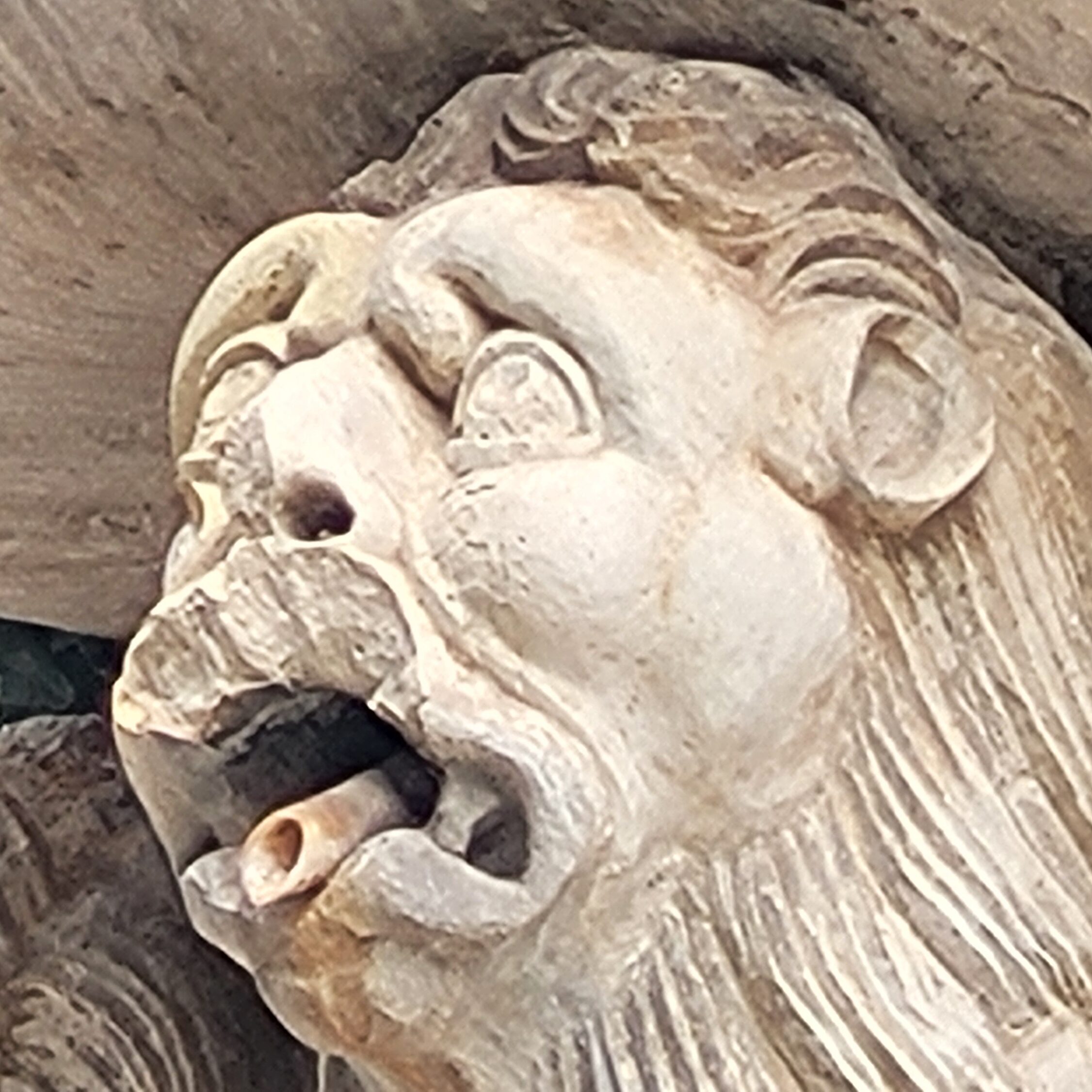
Fracture
But not all parts are lost gradually. Sometimes, a piece can suddenly break and become detached. This is called a fracture. Unlike gradual erosion, a fracture is usually caused by strong mechanical stress, an accidental impact or pressure — and sometimes it can also be the result of vandalism.
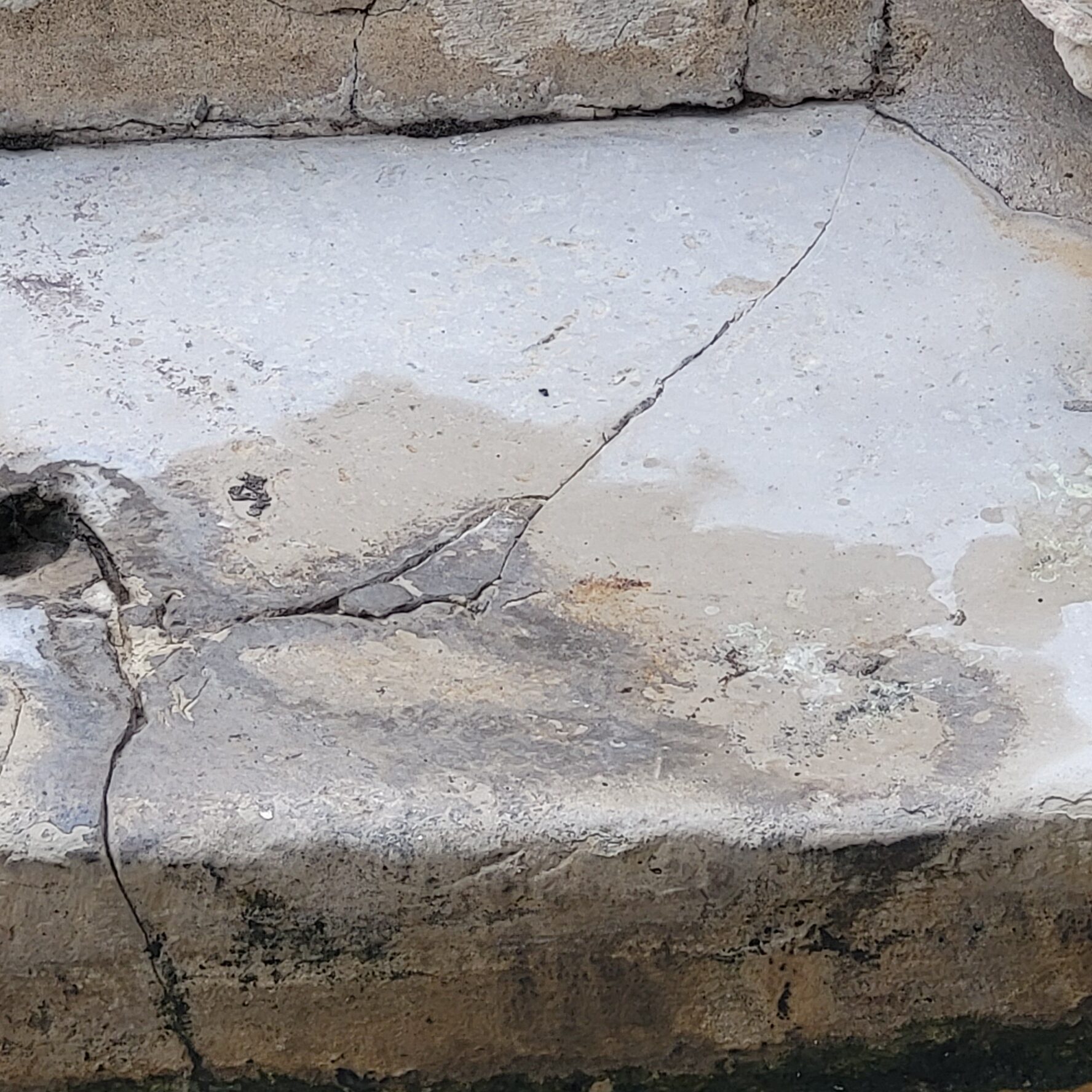
Cracks
Cracks appear as lines that cut through the surface of the stone. They can be very fine and close to the surface, or deeper and more serious. They form when the stone is exposed to forces it cannot withstand, for example earthquakes, vibrations, or freezing water expanding inside its pores. Cracks can develop further over time and may eventually cause pieces of stone to break off.
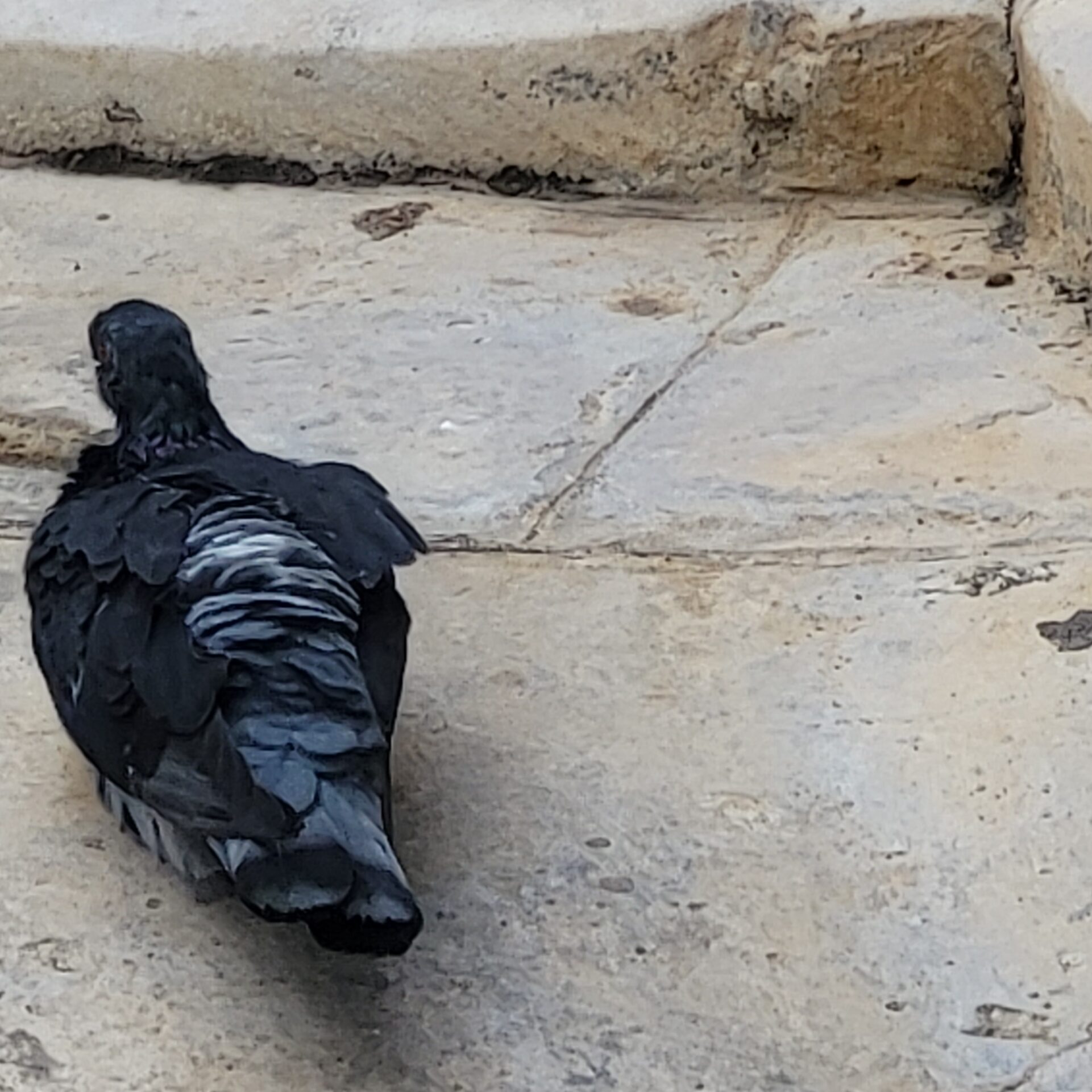
Biological growth & deposits
It’s not only people who love monuments!! Mosses, lichens and microorganisms can make themselves a home in the shady, wet areas of the fountain. And the problem is not only on how they look. Plant roots can grow into pores and cracks in the stone and cause further damage. Birds can also cause problems: their droppings contain salts and other substances that can affect the stone.
Disintegration
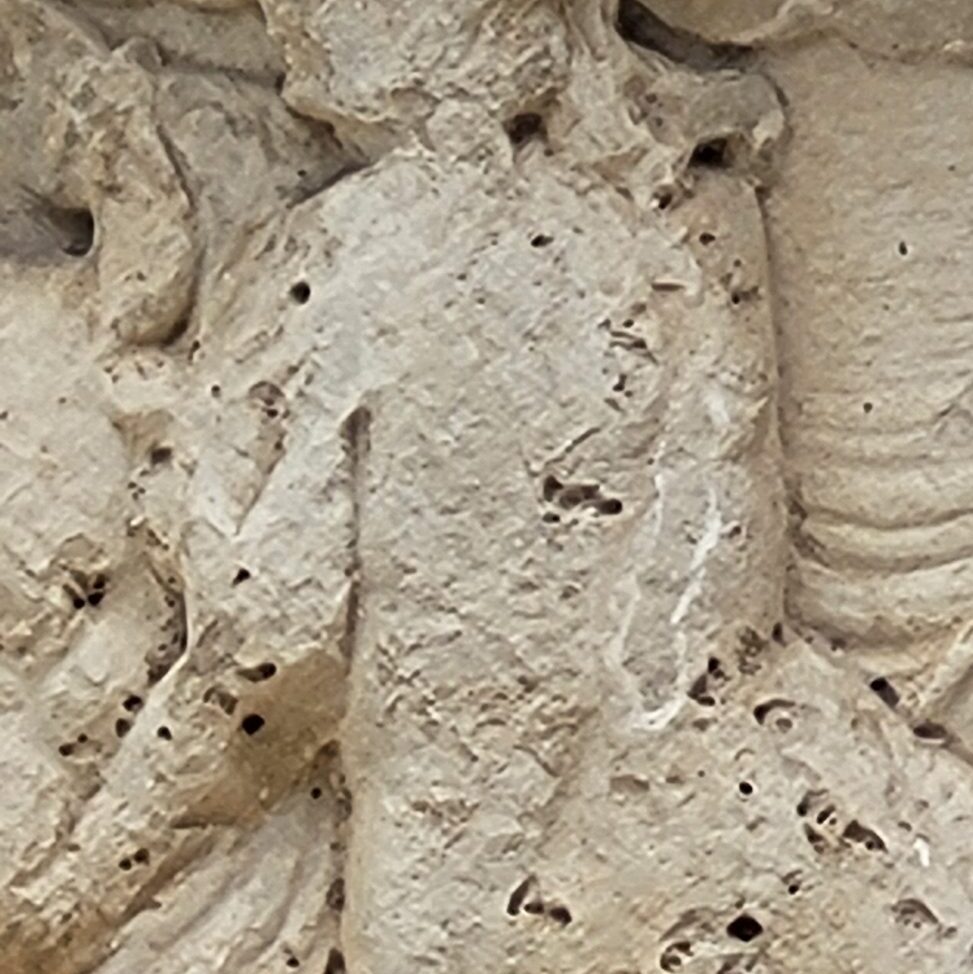
Can stone slowly turn into… dust? In some forms of disintegration, the stone gradually loses its cohesion and its surface becomes weak and crumbly. Some parts of the stone are more vulnerable and deteriorate faster than others. Small grains begin to loosen and fall away, until the surface can eventually look as if it is turning into sand or dust.
Flaking
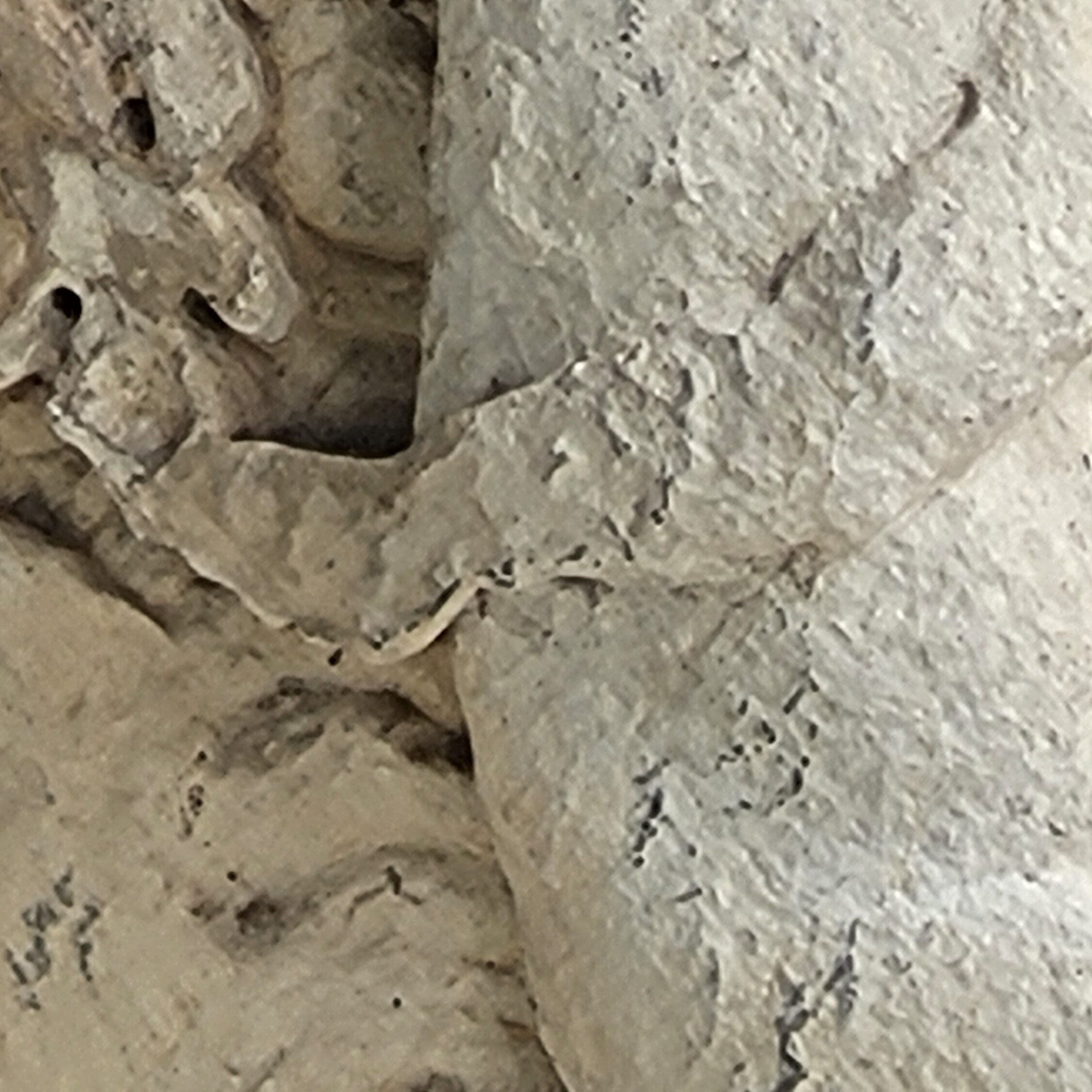
Can stone really… peel? Surprisingly, yes! This type of deterioration is called flaking. Thin layers gradually separate from the stone surface and may eventually fall off. Moisture, salts, changes in temperature and the particular properties of each type of stone can all contribute to this form of deterioration.
Cracking & Colour Change
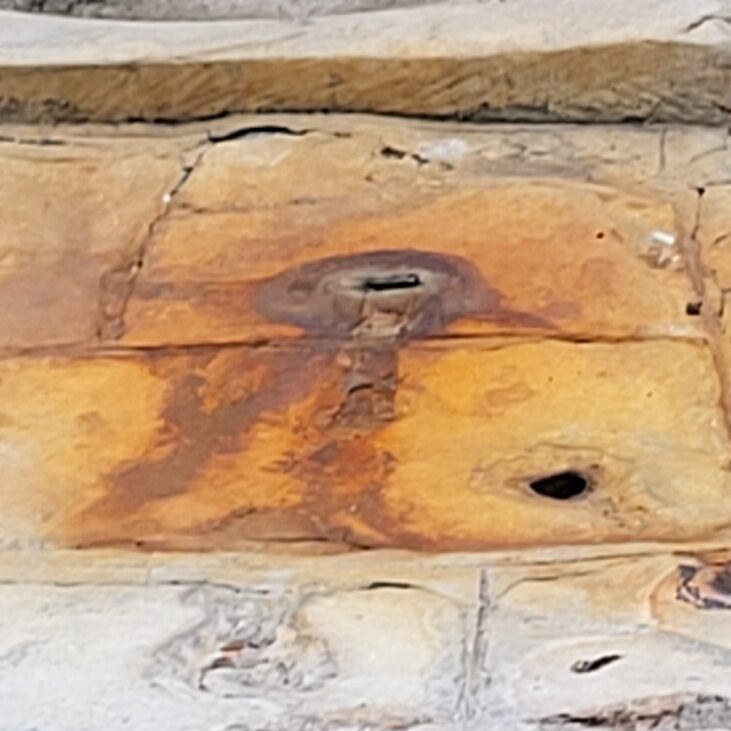
Sometimes the problem begins with a “personality clash”. Two materials may get along perfectly well at first, but over time their differences begin to show. Stone and metal, for example, react differently to moisture and changes in temperature. When metal corrodes, its corrosion products expand, putting pressure on the surrounding stone and often causing cracks. Corrosion can also leave characteristic colour changes — the familiar reddish-brown stains of rust.
Colour alterations
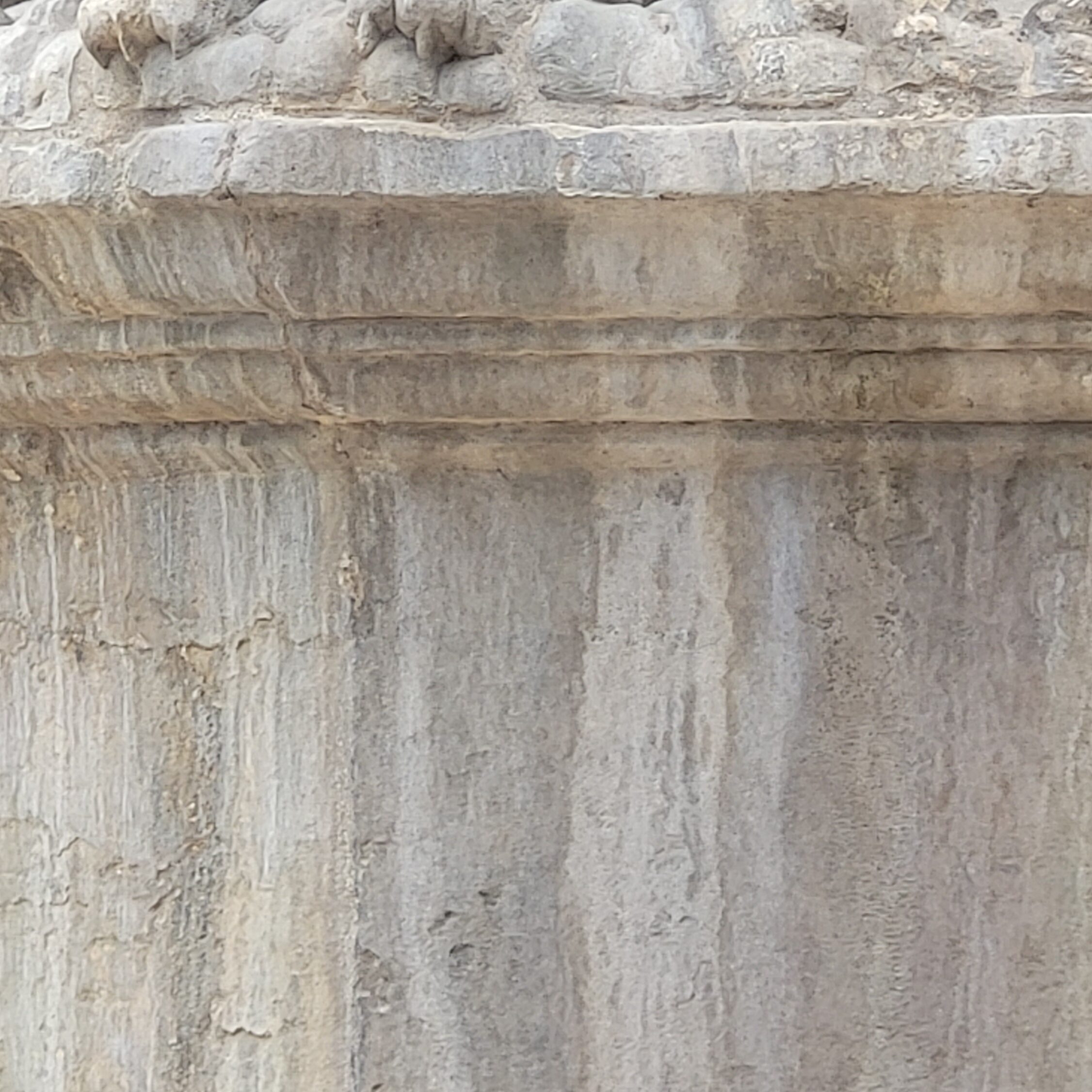
Stone monuments do not always have the same colour across their entire surface. Some areas may appear noticeably lighter or darker than others. These colour alterations can be caused by many different factors, including pollution, salts and biological deposits. Some may mainly affect the appearance of the monument, while others can be signs of active deterioration that needs to be addressed.