From past to present

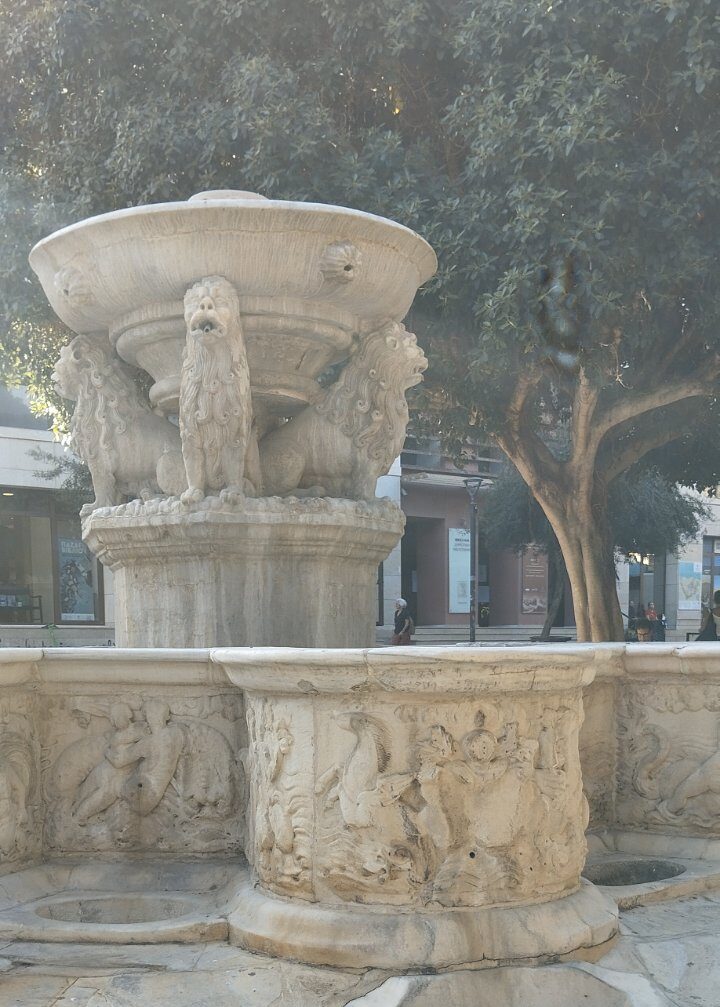
The Morosini Fountain, commonly known as the “Lions Fountain,” is one of Heraklion’s most beloved and recognisable landmarks. It was built in 1628, during the Venetian period, on the initiative of Francesco Morosini, in an effort to address the city’s longstanding water supply problem. At the time, Heraklion was known as Candia.

Water reached the central square through an extensive aqueduct that carried it from the springs of Mount Juktas. With its four lions and its eight-lobed basin, the elaborate fountain combined practical necessity with artistic beauty. The basin’s reliefs depict figures from the marine world of Poseidon, while a large statue of the god originally stood at its summit, although it has not survived.

Over the centuries, the fountain has undergone changes, additions and interventions, reflecting the historical events that have shaped the city. Nearly 400 years later, it remains a vibrant part of everyday life in Heraklion and a popular meeting point for both locals and visitors.

1625

The water supply problem

Francesco Morosini, as city’s captain-general, he promotes the construction of a large aqueduct to carry water from the springs of Mount Juktas to Candia.

1628

The inauguration of the Fountain

The fountain is inaugurated in Piazza delle Biade (Grain Square). Water flows from eight outlets, while a statue of Poseidon stands majestically at its summit. A special commemorative medal is minted to mark this festive occasion.

Ottoman period

New Uses and Transformations

Following the Ottoman conquest of Candia in 1669, the water supply was restored, and openings were made in the fountain’s eight lobes, damaging parts of the relief decoration in order to meet the needs of worshippers at the neighbouring mosque.

1830–1850

Fencing

During the period of Egyptian administration, it was decided that the fountain should be enclosed by marble columns and adorned with an inscription in gold lettering. The fountain was renamed “Fontana Abdul Mecid” in honour of the Sultan.

1900

Back to its original appearance

By decision of the Municipal Council, the Ottoman additions are removed, and the fountain largely regains its former appearance.

1969–1978

Early conservation efforts

The subsidence of the fountain’s basin raises concerns, prompting calls for a study and restoration works.

1980-1990

Railings

Repeated acts of vandalism prompt efforts to find ways to protect the fountain. Railings are installed but later removed for aesthetic reasons, and a surrounding water barrier is eventually chosen as the preferred solution.